
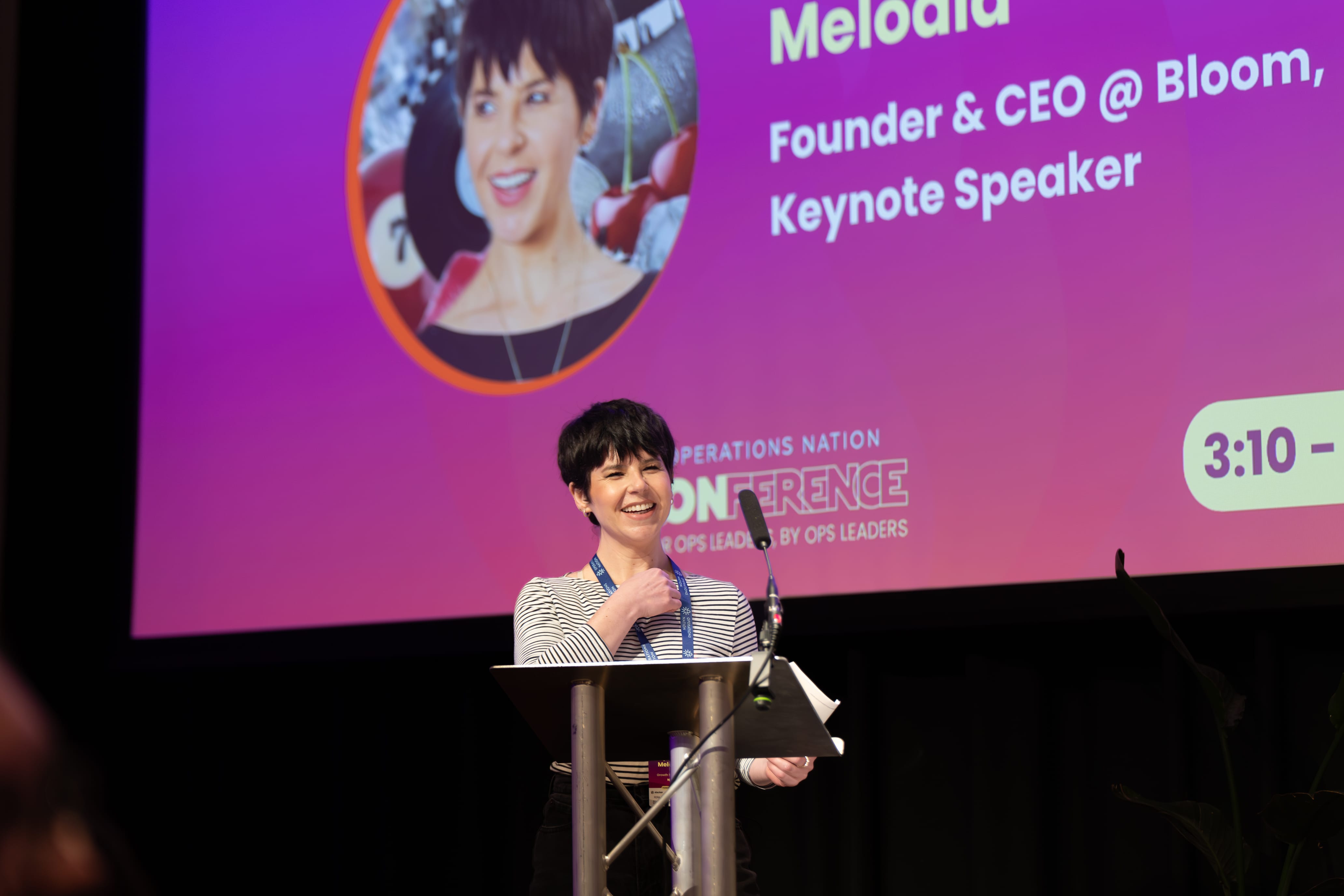
By Stephanie Melodia
What event organizers actually wish keynote speakers knew, straight from meeting planners at the annual NSA conference, Influence.
Public speakers spend years honing their craft, their message, and their delivery. Fewer spend any time on what happens backstage, in the inbox, and in the weeks before the event—even though this is often what determines whether an organizer books you again and again.
I got this straight from the source.
At this year’s NSA annual conference in Austin, Texas, I sat down with meeting planners, conference producers, and event organizers and asked them directly:
What do speakers often get wrong, and what would make your job easier?
Their answers were consistent, specific, and refreshingly simple to act on. Here’s what event organizers wish every keynote speaker knew.
(And they’re all SUPER easy!)
According to conference producers, meeting organizers, and event planners, keynote speakers would do well to:
Send your slides at least a week before the event
Send us your slides!
This highlights a real gap in speakers’ understanding; we think event organizers are just being their highly-organized selves, wanting to dot the i’s and cross the t’s, when, in reality, there are so many moving parts (especially with a large scale conference like Women in Tech(opens in new tab), for example) that this isn’t just the organizer being particular, it’s about respecting their requests and actioning them in a timely manner so everything flows properly.
‘Why do they need my slides?’ is what us speakers really need answering. Well, firstly they need them to drop into the full set—like their own opening slides or other speakers’ content.
They need to make sure everything is formatted correctly—especially if they’re using PowerPoint and you’re using Canva and they’re using Google Slides! Images can move around and fonts can get replaced. They also need to make sure everything flows properly, particularly if you’re integrating videos in your slides.
This is about setting up everyone for success. After all, you don’t want to repeat the Mariah Carey faux pas of New Year’s Eve 16/17 when her earpiece failed and the wrong track played…
No surprises! Be a *crystal clear* communicator
Anyone who’s ever had to organize their own wedding will feel the fear of a last-minute surprise. The DJ’s hungover. The priest has gone awol. There was a typo on the invite, now the guests have gone to the wrong venue.
Now, imagine that on a larger scale and your job’s on the line.
Do you need an instrument? Will you be using slides? Are you bringing on a guest? Do you have any special requests? Whatever you need, communicate it clearly in advance (preferably ahead of contract signing so everyone knows the score!)
Truthfully, I’ve been backstage with the producer more than once when something drastic like a headliner dropped out, and the curious (read: nosey) person that I am asks if this is the worst nightmare they’ve ever experienced on the job, and how they handle it? (Because I don’t think I could handle that level of stress!) The response has always been:
“Oh, no. I’ve had much worse,” and;
“It’s part of the job. We roll with it.”
Event organizers, meeting planners, and conference producers are the most resilient and flexible people you’ll ever meet. They can absolutely handle it. The difference is: they don’t want to and shouldn’t need to, and if you’re causing extra unnecessary aggro, chances are you won’t get booked again for next year…
Show up to the venue at least 90 minutes before your call time
The same could be said for showing up to a client pitch or important meeting. Being punctual shows respect and that you’re capable of time management—a crucial factor in any type of event. But if you can arrive early, even better. This will not only put the organizer at ease (they know you’re there and ready to rock & roll), but it will help you as the speaker in the following ways:
It gives you the opportunity to settle into the space and get comfortable with your surroundings before your role call;
If you arrive early enough and there are other speakers before you, it also gives you the chance to listen to them and perhaps interweave some nuggets into your own speech;
If there’s a bit of a downtime, arriving early also means you get a chance to mingle a little bit and meet more of the staff. This will leave a lasting impression way beyond your talk.
It shows you care.
It makes you look good.
So, next time your talk is scheduled for 2 p.m. and you’re due backstage by 1:15 p.m., maybe show up for midday.
Share your location with the event organizer
Now, I’ll be honest and admit I struggle to arrive at events super early (but will make a concerted effort following this blog post!) Whether it’s the time sat in hair & make-up, the meditative visualisation I always do before going on stage, or not accounting for traffic in a new city, it’s not always easy to get to the venue a few hours early.
With that in mind, a few of the NSA event organizers did say that as long as you’re keeping them abreast of your movements, this appeases a lot of their stress.
(One event planner even shared that one speaker gave them play-by-play text updates—from boarding the plane to checking into the hotel, from going to the gym to getting in the car on the way to the venue. Thankfully, the bathroom updates were kept private!)
Leave the ego at the door
There are lots of industries and professions where the ego runs amok. (I shan’t name them here… ) Inherently, as a public speaker, the spotlight is literally on you. You’re on an elevated stage for everyone to see you. You get applause, and sometimes even a standing ovation, which can leave even the most humble believing they’re a God-like rock star.
For a few minutes, until the next speaker comes on stage.
As a public speaker, you’re one part of the puzzle. One of the biggest and most visible parts of the puzzle, sure, but still; you’re one part.
You’re booked because of the organizer. You look good because of the lighting team. You sound good because of the audio technicians. You looking good makes them look good, and vice versa. Don’t take that for granted or overlook the unsung heroes behind the scenes. Whilst the spotlight may be firmly on you, this is still a team sport.
Stephanie Melodia(opens in new tab) is an int ernational keynote speaker, MBA faculty in Entrepreneurship, founder advisor, and creator of ‘Hacking Luck’ – a unique and refreshing system rooted in her domain expertise of entrepreneurship to stack the odds in our favour. Whether it’s training sales teams to “zag,” stretching corporate innovation’s risk tolerance, or exercising entrepreneurs’ resilience muscle. Stephanie travels the world delivering talks and workshops to help you and your team reach success, faster.